How to Prevent VTHD & ITHD Issues Early
Introduction
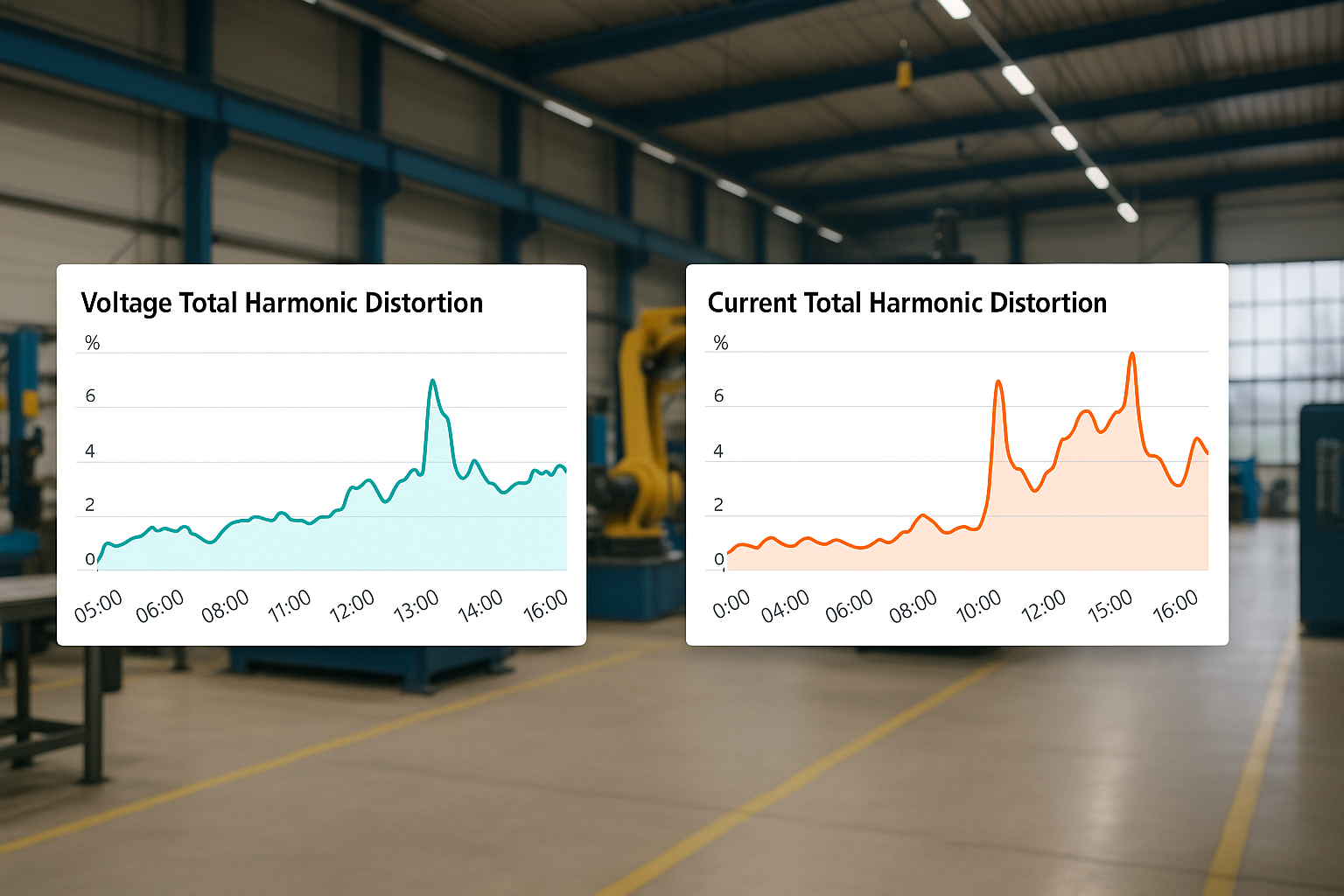
Industrial equipment like VFD motors, welders, servo drives and UPS systems depend on stable and clean power to operate reliably. However, most plants unknowingly run on affected power. This issue is caused by harmonics, and the two most important parameters used to measure them are VTHD and ITHD. When these levels rise, motors heat up, capacitor banks fail early, drives trip unexpectedly, and overall plant efficiency drops — often resulting in costly breakdowns and energy loss.
What Are VTHD & ITHD?
VTHD (Voltage Total Harmonic Distortion)
VTHD indicates how stable or “clean” your voltage supply is. Ideally, voltage should follow a smooth sine wave, but equipment such as VFDs, UPS systems and LED loads can affect this waveform.
In simple words:
- VTHD shows the condition of your voltage.
- High VTHD means unstable or poor-quality voltage reaching your equipment.
ITHD (Current Total Harmonic Distortion)
ITHD measures how evenly your equipment is drawing current. Machines with VFDs, welders and servo drives pull current in uneven spikes rather than a smooth flow.
In simple words:
- ITHD shows the condition of your current flow.
- High ITHD means machines are drawing current in an irregular or harmful pattern.
How VTHD & ITHD Affect Your Plant
When voltage and current quality decline, the impact spreads quietly across your entire electrical network.
High VTHD stresses equipment that relies on steady voltage, particularly capacitor banks, drives and control panels. These components begin wearing out earlier than expected, with capacitor banks being the first to fail when voltage quality drops.
High ITHD increases internal heating in motors, transformers, cables and MCC panels. Even if this heating isn’t visible from outside, it damages insulation, reduces efficiency and forces motors to work harder. Many sudden motor failures and repeated drive trips can be traced back to elevated ITHD levels.
Harmonics also reduce meter accuracy. When VTHD and ITHD rise, kWh/kVAh readings become unreliable, affecting costing and energy analysis.
Power factor performance is impacted as well — even a fully functional APFC panel struggles to maintain stable PF when VTHD is high, leading to additional stress on capacitor banks and possible penalties.
In short, increased VTHD and ITHD reduce system efficiency, generate excess heat, and shorten equipment life, often resulting in unexpected downtime.
How StatStream Helps
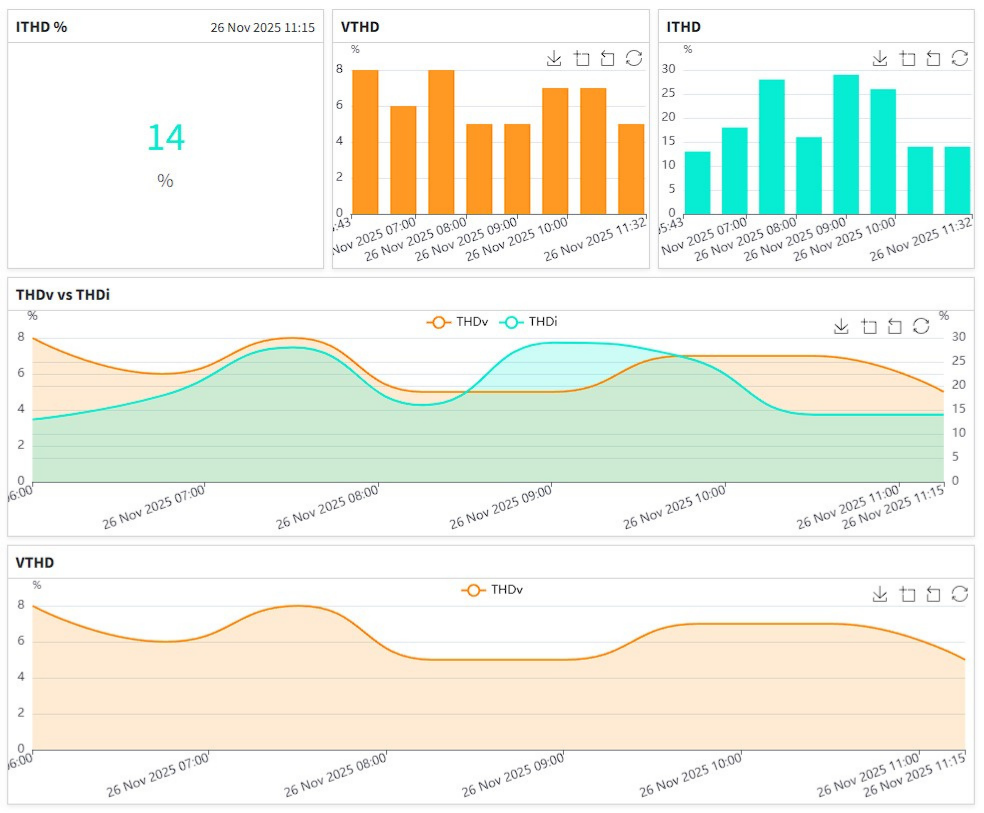
StatStream helps you keep track of VTHD and ITHD easily, giving your team a clear understanding of when these levels rise so you can take action before they affect your equipment.
The VTHD and ITHD percentages shown on the MFM are the Voltage Total Harmonic Distortion and Current Total Harmonic Distortion levels measured at that point. These values help you understand the real condition of the voltage and current waveforms your plant is receiving.
Conclusion
VTHD and ITHD are essential indicators of your plant’s electrical health. When these values rise, motors, drives, transformers and capacitor banks are placed under hidden stress that increases heat, reduces lifespan and causes unpredictable shutdowns. By monitoring VTHD and ITHD in real time, StatStream helps you detect issues early, reduce energy loss, avoid equipment failures and maintain smooth, reliable operations across your plant.