How to Keep Your Transformer Running Safely and Avoid Costly Failures
Introduction
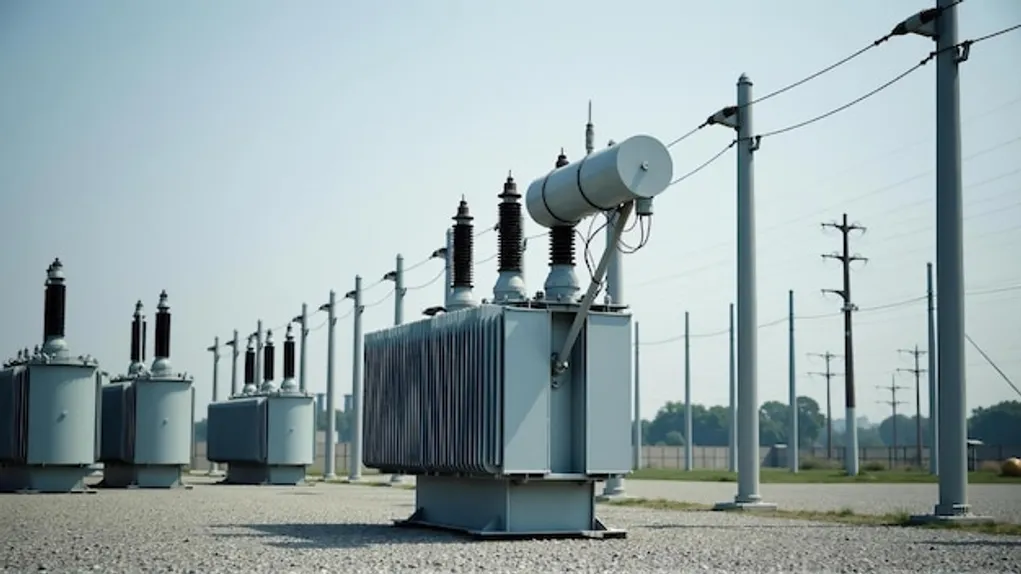
Electricity powers everything around us—from the lights in our homes to the machinery in factories. But electricity generated at power plants isn’t immediately usable. It travels over long distances at high voltages to reduce losses and is then stepped down to safe, usable levels before reaching homes and industries.
Transformers are the devices responsible for this critical voltage conversion. They ensure industrial, commercial, and utility systems operate efficiently, safely, and reliably. Without transformers, long-distance electricity transmission and stable voltage supply would be impossible.
What Is an Electrical Transformer?
A transformer is a static electrical device that transfers energy between circuits using electromagnetic induction. Its main function is to adjust AC voltage levels while keeping the frequency constant.
Key Types:
- Step-Up Transformer: Increases voltage and reduces current, suitable for long-distance transmission.
- Step-Down Transformer: Reduces voltage and increases current for safe use in homes, industries, and commercial facilities.
Transformers enable electricity generation, transmission, and distribution with minimal losses.
Key Components & Structure
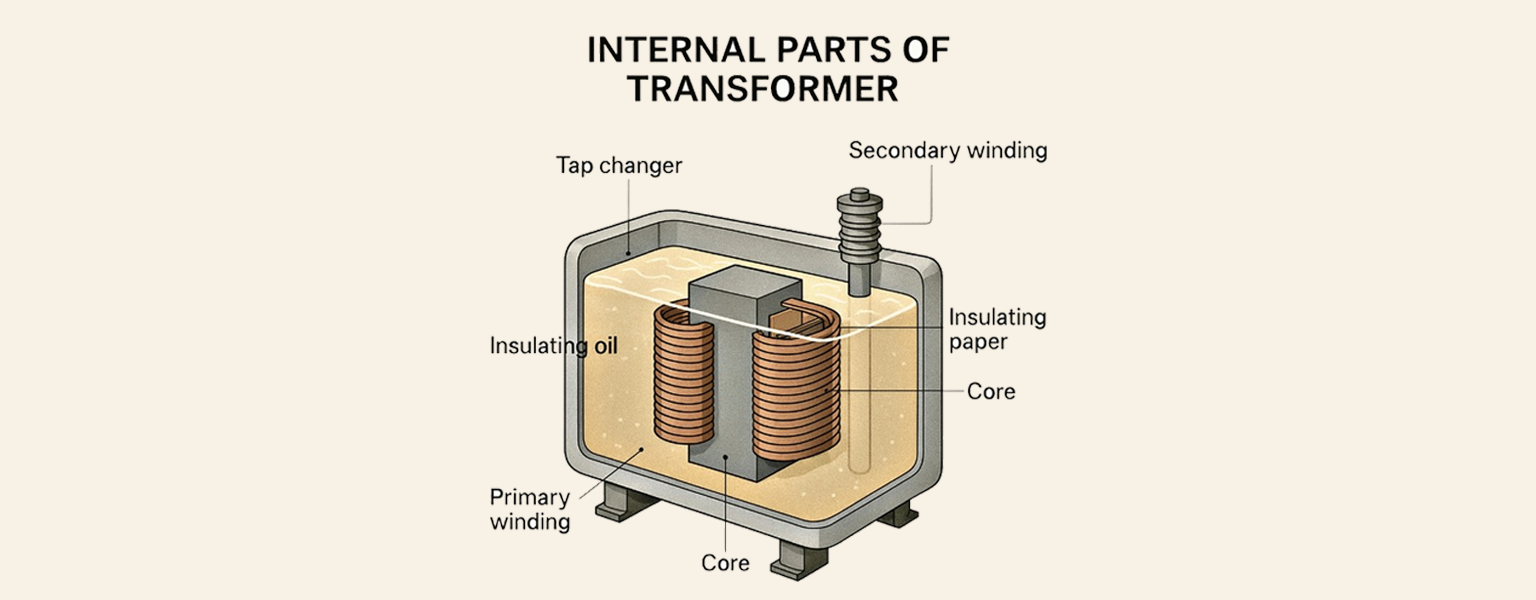
- Magnetic Core: Laminated steel core channels magnetic flux and minimizes energy losses.
- Primary Winding: Coil connected to the AC source, generating a magnetic field in the core.
- Secondary Winding: Coil where voltage is induced for delivery to the load.
- Insulation: Separates core and windings, preventing short circuits.
- Cooling System: Maintains efficiency and prolongs life through oil-cooling, air-cooling, or forced cooling. Low oil levels can cause overheating and insulation failure.
Types of Transformers & Their Applications
1. Power Transformer
High-voltage, high-capacity devices used at generation stations and substations. Often oil-filled for cooling and insulation. Low oil levels can lead to overheating and insulation failure.
2. Distribution Transformer
Smaller transformers near homes and offices that reduce voltage from sub-transmission levels to 230V/415V. Oil maintenance ensures reliable operation.
3. Step-Up Transformer
Increases voltage for long-distance transmission. Typically oil-filled in large units to manage high voltage and thermal stress.
4. Step-Down Transformer
Reduces voltage for safe use in homes and factories. May be oil-filled or dry-type. Proper maintenance prevents overheating.
5. Single-Phase Transformer
Contains one primary and one secondary winding. Ideal for small residential or commercial loads.
6. Three-Phase Transformer
Three primary and three secondary windings for industrial and large-scale loads. Efficiently supplies three-phase systems. Oil maintenance is critical for heat and phase balance.
7. Other Types
Includes core-type, shell-type, dry-type, oil-immersed, pad-mounted, and pole-mounted transformers. Differences depend on construction, cooling method, and application. Regular maintenance ensures safe and reliable operation.
Why Transformer Monitoring Is Essential
Modern transformer systems demand continuous supervision to ensure reliability and prevent faults. Monitoring key indicators such as Oil Temperature Indicator (OTI), Winding Temperature Indicator (WTI), oil level, voltage, current, and load percentage helps detect early signs of stress or malfunction.
When OTI or WTI readings exceed safe limits, it indicates potential overheating — often caused by overload, high ambient temperature, or cooling failure. Similarly, a drop in oil level may compromise insulation and accelerate aging of internal components.
Advanced platforms like StatStream continuously capture these parameters through IoT-enabled sensors, generating real-time alerts and trend analysis. This allows operators to take corrective action before failures occur, improving transformer reliability, efficiency, and operational safety.
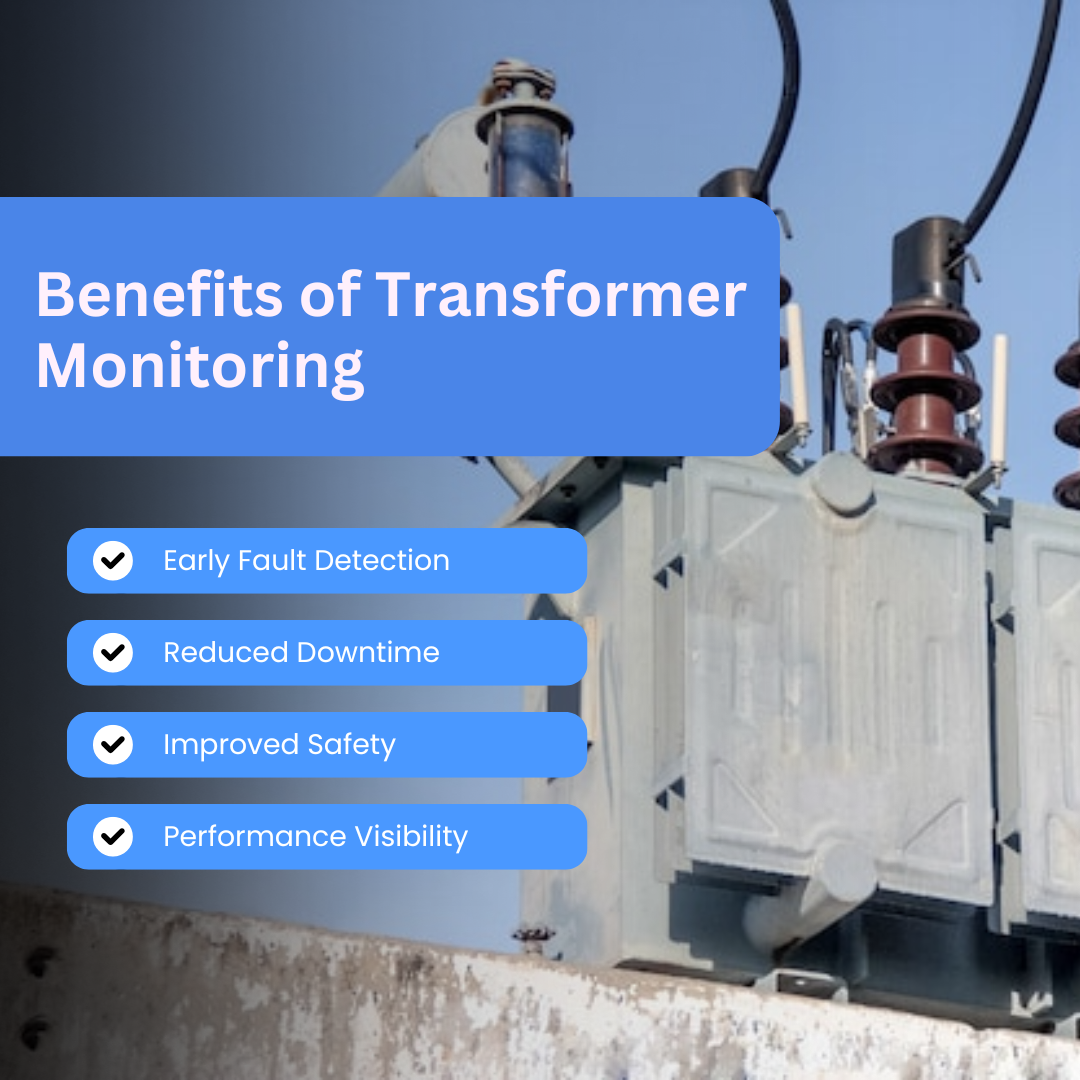
Benefits of Transformers Monitoring
1. Early Fault Detection:
Spot issues like high OTI/WTI or low oil levels before failures occur.
2. Reduced Downtime:
Provides real-time alerts for abnormal temperature, load, or oil levels, preventing unplanned outages.
3. Improved Safety:
Prevents overheating, fire hazards, and equipment damage.
4. Performance Visibility:
Tracks key parameters for better decision-making.
Conclusion
Transformers play a critical role in powering industries, and even minor faults can lead to major disruptions. By monitoring key parameters like OTI, WTI, and oil levels, you can prevent overheating, insulation failure, and costly downtime.
Advanced monitoring platforms like StatStream provide real-time insights, alerts, and reports, helping optimize transformer performance, reduce energy losses, and ensure operational reliability.